InDesign | Photoshop | Editorial Design | English | Art History | Otto Dix | Leni Riefenstahl | Art | Role of Art | History | Informative | Development | Bookstore
What role does art play in society? Can it do more than just look beautiful?
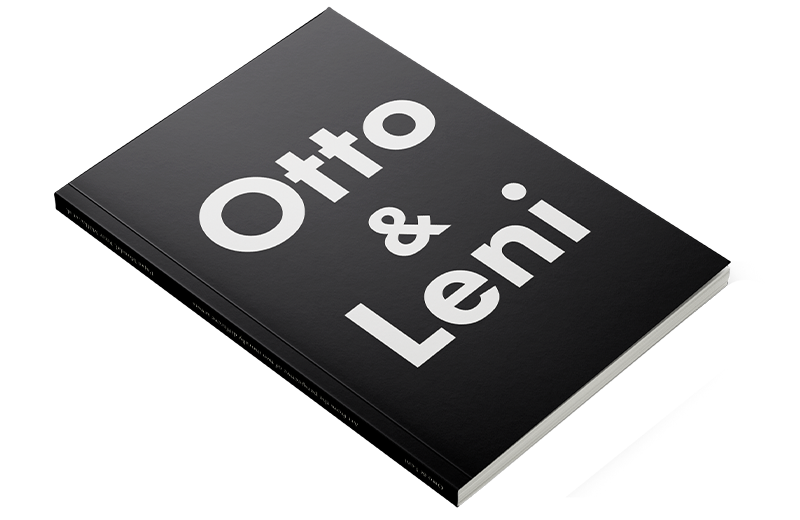
By recounting the life stories of Otto Dix and Leni Riefenstahl, the book addresses precisely this question.
These were two completely different artists who not only had different professions, but also opposing morals and views.
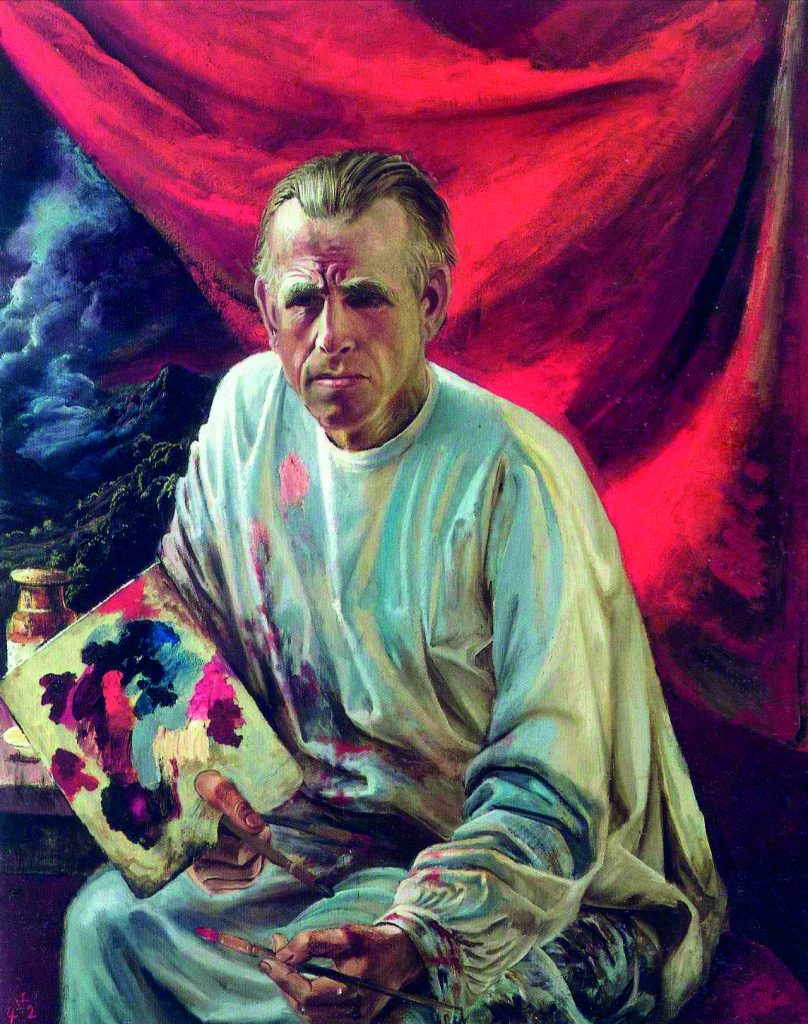
Self-portrait by Otto Dix
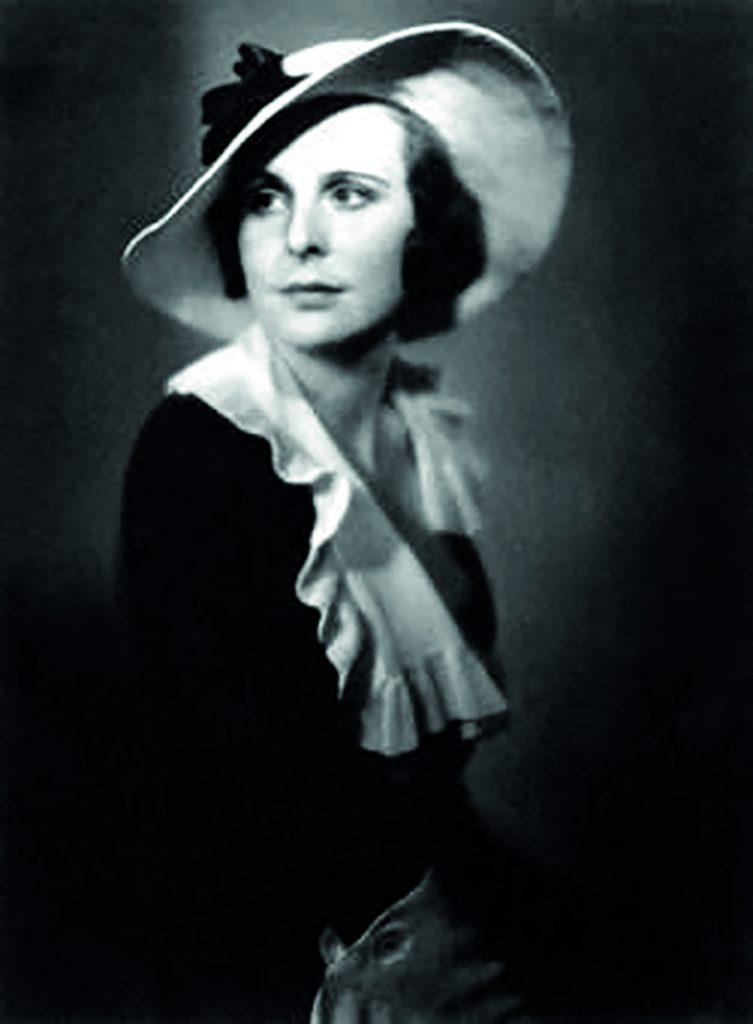
Photo Leni Riefenstahl
With these two artists as its guiding thread, the book focuses on a very turbulent period in human history.
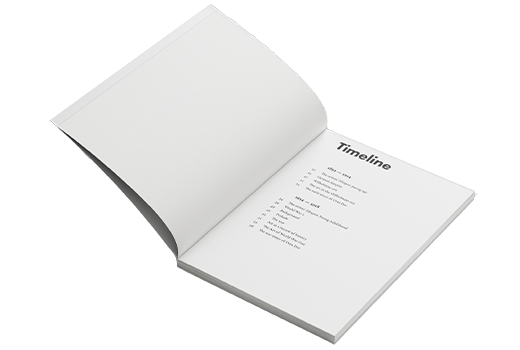
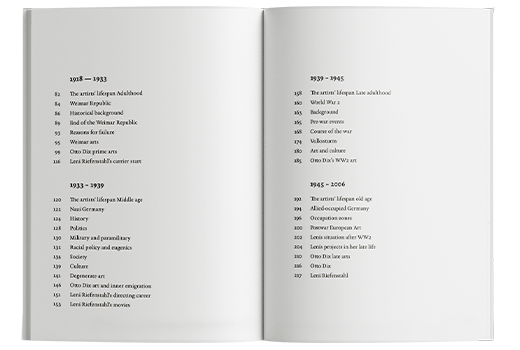
For this reason, the table of contents is structured like a timeline and titled as such.
The section markers on the page numbers also provide orientation.
Art developed rapidly and strongly during the period between the two world wars.
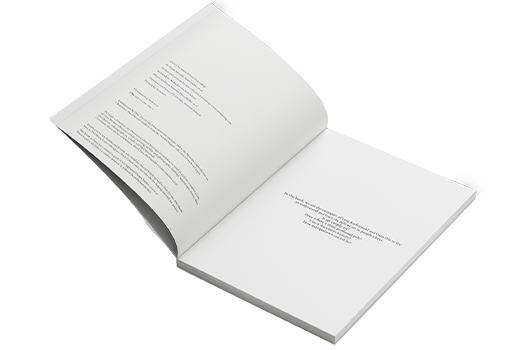
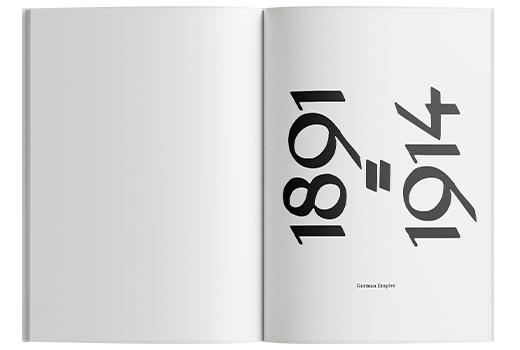
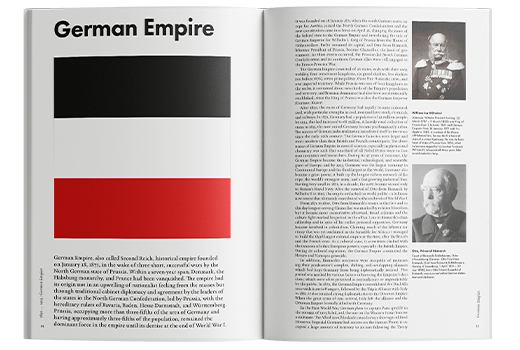
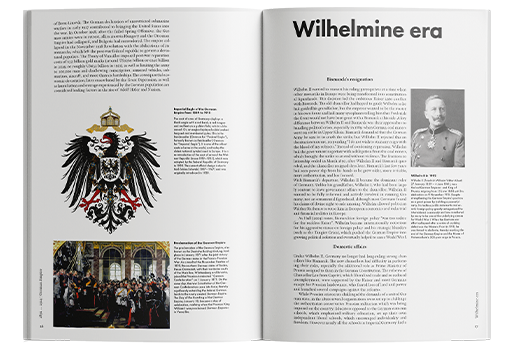
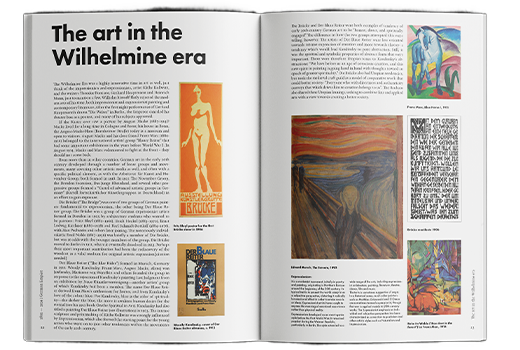
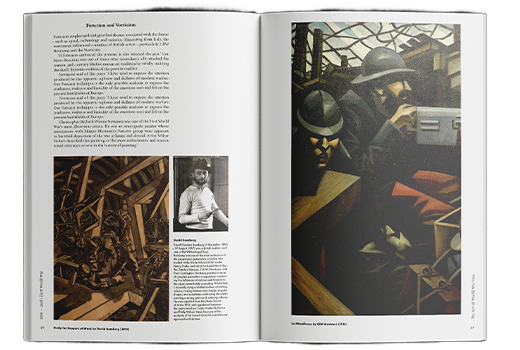
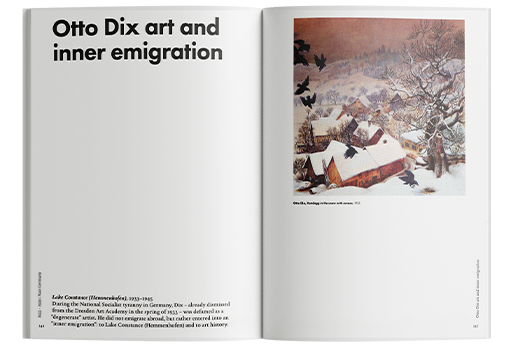
The design of the book serves primarily to present as much information as possible in an easily readable form. The various historical sections are clearly separated from one another. The dates and section titles provide a basic orientation to the chronological sequence.
The biography of the artists in their respective eras forms the opening chapter of this historical account. Here, the influence that events had on Otto and Leni is made clear.
An overview of their lives can be found again at the end of the book.
In turbulent times, art does not only evolve visually. Its role is also changing increasingly.
For historical context, the biographies are followed by a summary of events. Each historical chapter begins with a large picture and a short introduction. Additional information is provided in the margins alongside the main text.
After the historical part, the art from the corresponding era is analyzed and supported with relevant visual material.
Art is a mouthpiece, documentation, and emotions.
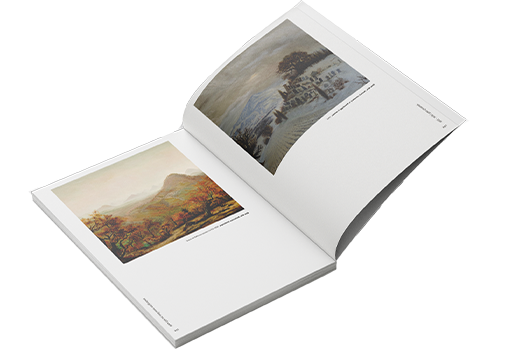
The last part of this historical section is the gallery of the two artists. The intro is a short explanation in the style of a biographer. This is followed by the illustrations.
"Art has a voice – let it speak."
~ Rochelle Carr
This function has been disabled for Ann-Christin Pettendrup.